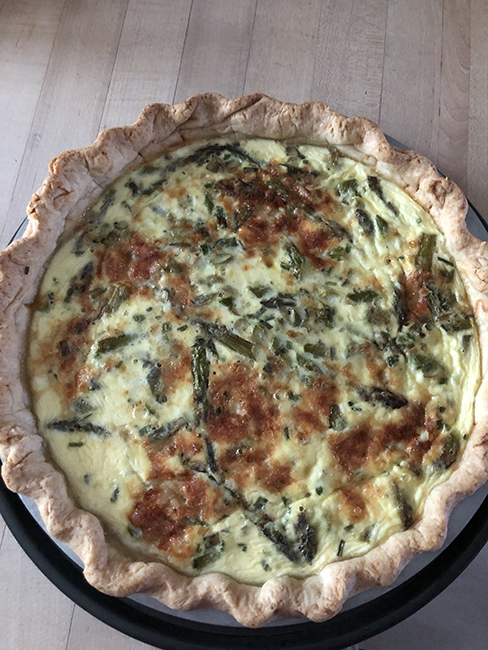
Master vegetable quiche recipe

Use this formula to make vegetable – and cheese! – quiche, using just about any vegetable and cheese.

Crust:

1 1/2 cups flour (unbleached white or whole wheat)
good pinch salt, unless you’re using salted butter
2 teaspoons sugar
1/2 cup butter, either salted or un- (1 stick, 8 tablespoons)
1 tablespoon vegetable shortening or lard
1 tablespoon sugar
2-4 tablespoons cold water

Filling:

1-2 tablespoons butter or olive oil
1/2 to 1 cup chopped onion, or other onion-like vegetable – shallots, scallions, leeks, etc.
Two generous cups vegetables, cleaned and sliced, e.g. asparagus, broccoli, mushrooms, kale or other sturdy greens, etc. The exception is spinach – since it will wilt down a lot, you’ll need to start with at least half a pound and up to one pound of spinach.
salt and freshly ground pepper
1 1/2 cups grated cheese, 3-4 ounces, or similar volume crumbled goat cheese or feta
2-4 eggs
1 1/2 to 1 2/3 cups half & half, buttermilk, heavy cream, or a mixture

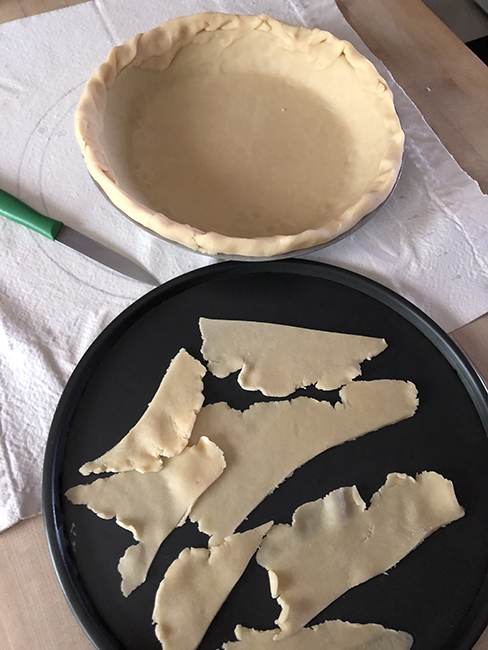
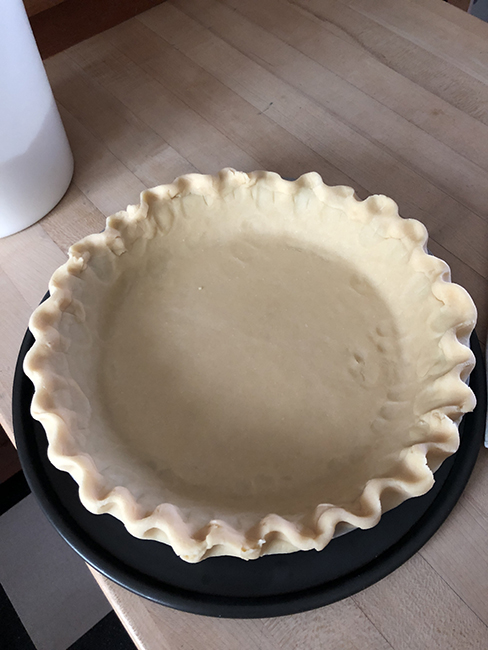
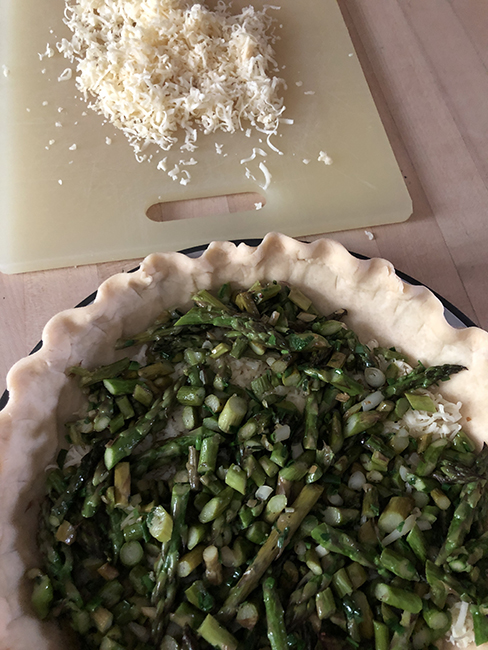
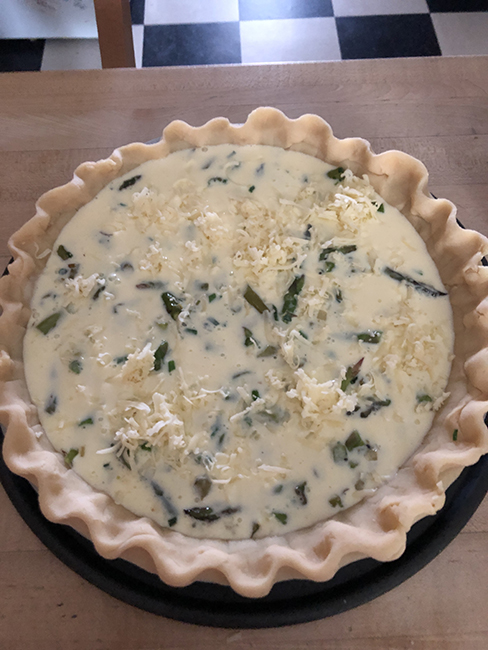
See below for process pictures.

Make the crust: measure the flour, salt and sugar into the bowl of your stand mixer (my favorite method), your food processor, or a mixing bowl. Slice the butter and shortening over the top and combine with the flour mixture, using the paddle attachment of the mixer, by pulsing the processor, or using a pastry blender, 2 knives, or your fingers, until you have a crumbly mixture with no butter lumps bigger than currants. With the mixer or processor running, or while stirring with fork, drizzle in the water by tablespoons, until the mixture just starts to come together in clumps. Stop before you have one big ball. Turn the crust out onto a floured surface and knead lightly to bring it together. Gather it into a ball, flatten into a disk, wrap (in plastic, wax paper, one of your reusable snack/sandwich bags), and chill for about an hour, and up to 2 days.

When you are ready to assemble the quiche, if the dough has been chilling, get it out of the fridge about 15 minutes before you want to roll it out, to soften just a bit. Roll out the crust and fit it into a shallow 9-inch pie plate, metal preferred. The crust browns better in metal then glass, and tends to slip down the sides less. Set the crust in the fridge or freezer while you prepare the filling.

Make the filling: melt the butter or pour the olive oil in a 10-12 inch skillet with a lid. Add the onions and sauté over medium heat until softened but not browned, 5-10 minutes. If you are using a vegetable with harder parts, such as asparagus stalks or broccoli or chard stems, add them now. Season with salt and pepper and continue to cook until starting to soften, another 5 minutes or so. Add the rest of the vegetable, e.g. asparagus tips or broccoli florets. Cover the pan the let everything steam until the vegetables are done to your liking – they should be a little underdone than for regular eating, since they will cook again in the quiche. If you are using greens add them to the onion mixture, and cover right away to wilt. Remove the lid and cook for a few more minutes to boil off any excess liquid. remove from the heat and let cool.

Assemble the quiche: Heat the oven to 375° Get the quiche crust out of the fridge or freezer, and place it on a cookie sheet or pizza pan, dark colored (better for browning) if you have one.

Sprinkle a layer of cheese into the bottom of the crust, reserving about 1/3 cup for topping. Beat the eggs in a spouted measuring cup that’s at least 2 cups (one pint) or larger if you have one. Add enough of whatever dairy product you are using to come to 2 1/4 cups. Add the vegetable filling on top of the cheese, and then pour in the egg mixture. Some people like to put the vegetable & cheese filled quiche onto the oven rack, and then add the egg to avoid having to walk across the kitchen with a liquid-filled quiche.  If your oven racks don’t slide in smoothly you might spill the quiche at that point, however.

Bake for about 25  minutes on an upper rack then move to a lower rack and back another 20 minutes or so until puffed and golden. Allow to rest for about 15 minutes before cutting and serving. Enjoy hot or room temperature.
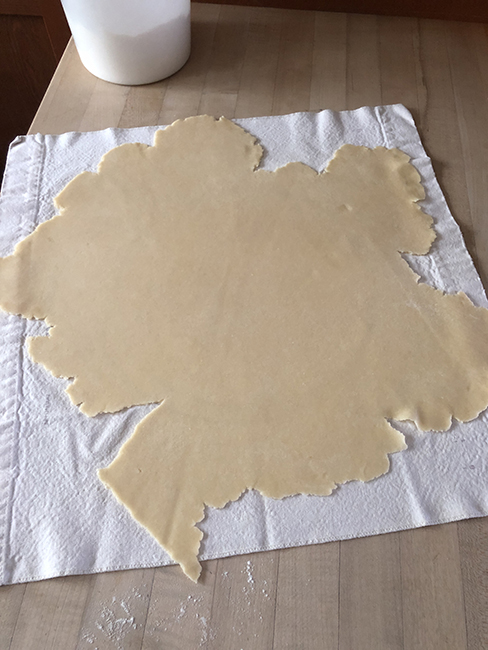
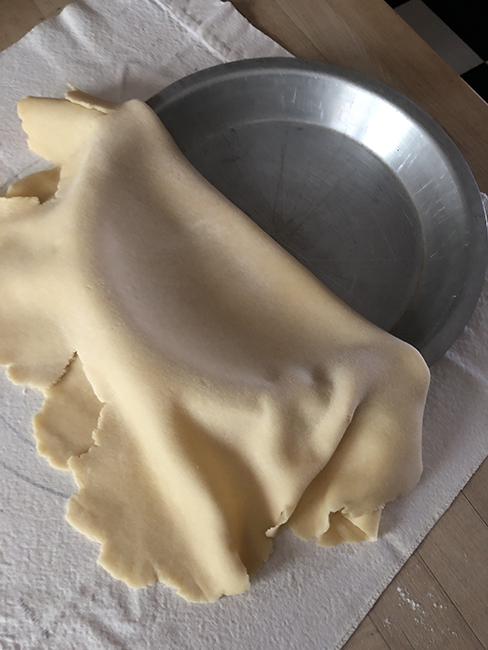
Rolled out piecrust.
Flop the pie crust in half and place it in the pan. Unfold and gently fit into the pie dish.
Trim the edges of the pie crust, and roll the remainder to make a neat edge. Place the trimmings on another cookie sheet. Sprinkle with cinnamon sugar and bake along with the quiche for a treat. Watch carefully – they cook fast! Done in 10 minutes or less.
Crimp the edges – this pattern was made with 2 fingers and a thumb – you can also crimp the edge with a fork. Place the crust in the fridge or freezer while you make the filling.
Add the cheese first, then top with the vegetables.
Pour the egg mixture over the vegetables, and sprinkle on a little extra cheese.

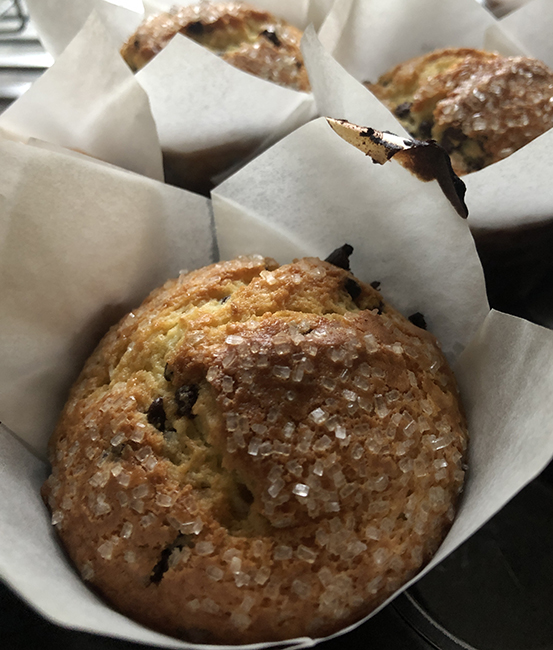
Orange-scented Ricotta Chocolate Chip Muffins

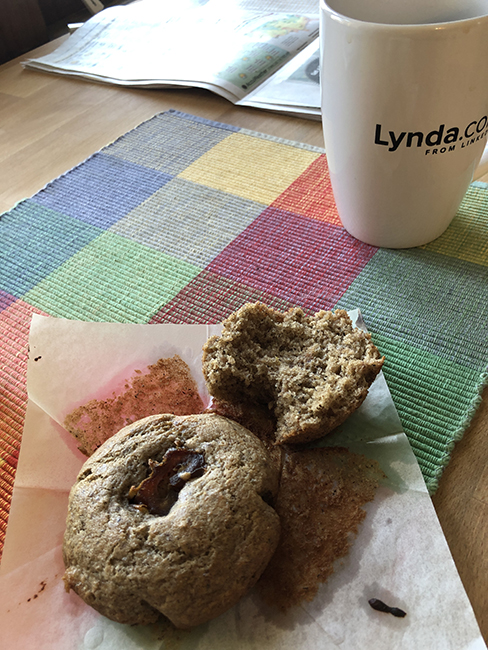
On a Monday morning, I was musing on what kind of muffin to make, using up various things that I had in the fridge and kitchen; banana? No, we’ll probably want to eat the bananas. Buckwheat flour? No, I made some buckwheat-date muffins recently, the ones I always make after Passover to use up the charoset. Ricotta? Yes! These are based on Yossi Arefi’s Black- and Blueberry Ricotta cake. I only have frozen blueberries right now, so was considering, and when I saw her suggestion of chocolate chips, that did it.

Ingredients:

1 cup + 2 tablespoons sugar
3 large eggs
3/4 cup unflavored oil, such as safflower or canola
1 1/2 to scant 2 cups ricotta (16-oz. container with like a spoonful out)
1 1/2 teaspoons vanilla
1 teaspoon kosher salt
grated zest of one organic orange
1 3/4 cups + 2 tablespoons flour
1 teaspoon baking powder
1/2 teaspoon baking soda
1 3/4 cups mini chocolate chips
coarse sugar for sprinkling on top

Grease or line the wells of a 12-cup muffin tin with papers. You might need one extra muffin cup or ramekin – I got 13 muffins, baker’s dozen. Heat the oven to 375°

Break the eggs into a large mixing bowl, and add the sugar. Beat with a whisk until it’s looking a bit lightened – about 3 minutes. Pour in the oil and whisk until it’s nicely emulsified. Beat in the ricotta, breaking up the lumps until smooth. Add the vanilla and salt, grate in the orange zest, and stir. Switch from the whisk to a silicone spatula, and mix in the flour, the baking powder and soda, then fold in the chocolate chips.

Scoop the batter into the muffin tin, and sprinkle with sugar.

Bake for about 25 minutes until nicely browned and firm.

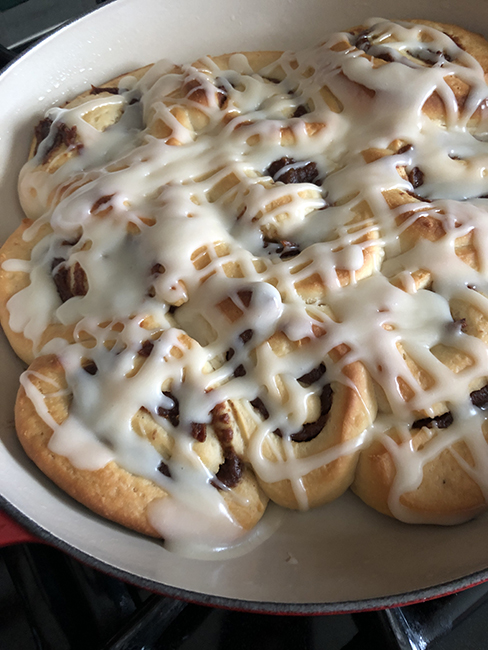
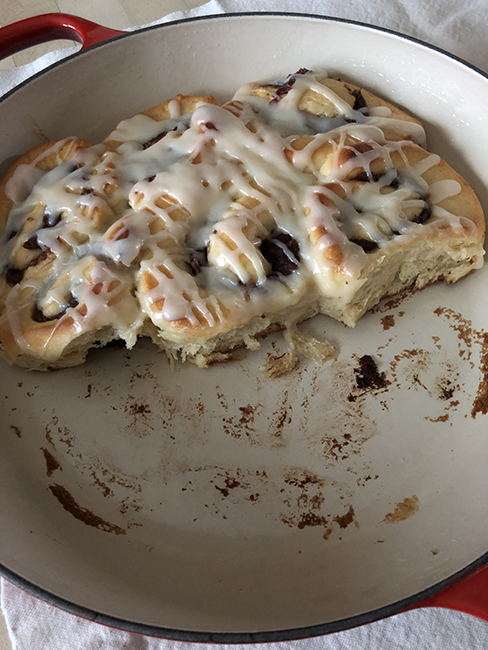
Definitive Buttermilk Cimmy Buns – 2022 Update

See original recipe here, makes about 2 dozen buns; updates based on this Bon Appetit recipe, April 2020.

Makes 9 large buns

For the dough:
1/4 cup  water
2 1/4 teaspoons active dry yeast (1 packet)
1/4 cup dark brown sugar
1 cup buttermilk or whole milk yogurt at room temperature
5 tablespoons unsalted butter, softened
2 teaspoons salt (or just a pinch if you use salted butter)
3 cups unbleached white flour

For the filling:
3/4 cup King Arthur Baker’s Cinnamon Filling, and 2 – 3 tablespoons water
OR
Use this filling
OR
Date filling:
1 lightly packed cup of pitted and chopped dates, preferably Medjool
!/4 cup dark brown sugar
2 teaspoons cinnamon
2 tablespoons vegetable oil
pinch of kosher salt

For the glaze:
2 tablespoons cream cheese, softened – microwave for about 10 seconds if you forget to leave it out
1 lightly packed cup powdered sugar
1-2 tablespoons milk
1/2 tsp. vanilla

Make the dough: Pour the 1/4 cup water into the bowl of a stand mixer. Sprinkle in the yeast, and let it soften. Add the sugar and buttermilk or yogurt. With the paddle beater, mix in the salt and a cup or two of flour. Start adding the butter by tablespoons. Add enough of the rest of the flour to make a very soft dough. Mix/knead on medium speed for five minutes. Form the dough into a ball and transfer to a plastic container with room to let it rise. 2 quarts is a good size if you have one, otherwise cover the mixing bowl airtight. Refrigerate the dough for 8 hours or up to 24.

Make the filling: Place the dates in a heat proof bowl and pour in 1 cup boiling water. Let stand to soften, 10 minutes or more. Drain the dates, and puree in a food processor with the sugar, oil, and salt. You can refrigerate the filling while the dough rises in the fridge. Let it come to room temperature before assembling the buns or it wil be difficult to spread.

Assemble and bake the buns: Grease a 10-12″ cast-iron skillet or 9-10″ cake pan with vegetable oil or butter. Remove the dough from the fridge, and scrape out onto a very lightly floured surface. I like to use a pastry cloth (sometimes called a frame); it’s a piece of heavy cotton printed with a ruler and circles for rolling out the dough. Roll the dough out to an 8″ square. Fold in half into an 8 x 4″ rectangle, then fold rectangle over itself to form a 4″ square. If the dough resists, let it rest about 5 minutes to relax and try again. After the second folding, roll out the dough to a 10 x 12″ rectangle. Dollop the cinnamon filling of your choice onto the sough and spread it, leaving about a 1-inch border on one of the long sides, and going right up to the edge on the short sides.

Roll the dough up tightly and pinch closed. Cut the roll into 9 slices with a chef’s knife or (unflavored!) dental floss and place them in the pan. Cover the pan with a domed lid if you have one, or greased foil if not. Let the covered buns rise until puffy, 1 to 1 1/2 hours depending on how warm your kitchen is.

Heat the oven to 350° and bake the still-covered buns for about 20 minutes, until they are risen and firm but not browned. Remove the lid, and continue to bake another 15-25 minutes until nicely browned.

Finish: While the buns are baking, mix up the glaze. Put the cream cheese in a bowl and whisk in the powdered sugar, milk, and vanilla.

When the buns are done, remove from the oven and let cool for 10 minutes. Drizzle the glaze over and serve warm!

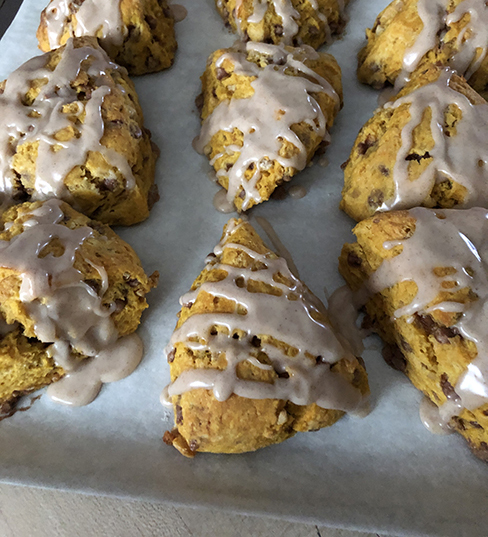
Pumpkin (or winter squash) Scones with Maple Glaze

pumpkin scones
Make 12 scones
Takes about 45 minutes

3 cups flour
3 tablespoons sugar
1 teaspoon cinnamon
1/2 teaspoon ground nutmeg, freshly grated
1/2 teaspoon ginger, or 1 tablespoon grated fresh ginger
OR omit the other spices and use to 2 teaspoons pumpkin pie spice
1/2 teaspoon salt
1 tablespoon baking powder
3 tablespoon butter
1 cup pumpkin or winter squash puree (approximately the yield of one roasted squash!)
1 egg
3 tablespoons honey
2-3 tablespoons milk, if necessary
Optional: up to 1 cup chopped dates, cinnamon chips, nuts, dried cranberries

Icing
1 cup confectioners’ sugar
3 tablespoons maple syrup

Preheat the oven to 400 degrees.

Combine flour, sugar, spices, and baking powder in a bowl. Slice butter on top, and cut in with a pastry blender until the mixture has a meal-like consistency. Mix the pumpkin, egg, and honey, and add to the flour mixture, mixing and kneading until you have a soft dough, adding optional milk if necessary.

Divide the dough in half and on a floured surface, roll or pat it into two 8-9 inch circles, and cut each into 6 wedges. Place on a parchment lined, or un-greased baking sheet, and bake in the oven until browned and firm.

Combine the icing ingredients while the scones bake. Drizzle the icing over the scones after they have cooled for about 10 minutes.

Summer 2021 CSA box recipes

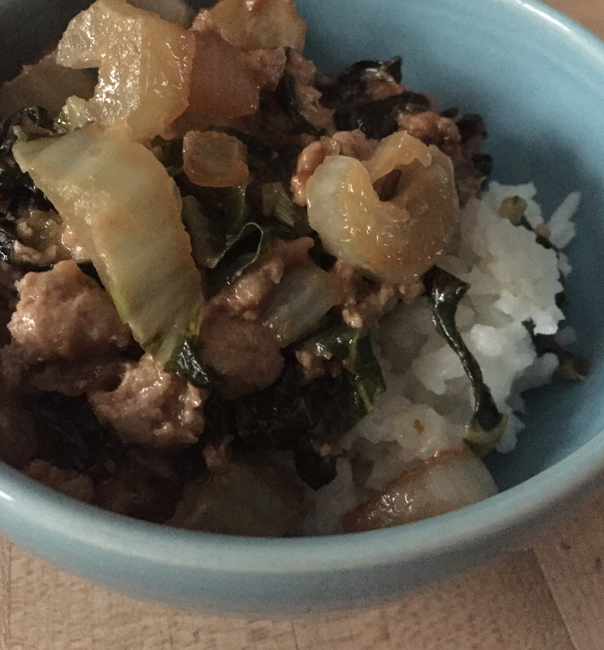
Bok choy, red pepper, and ground turkey, or pork, or tofu stir fry

Turkey bok choy stirfry
Takes about 30 minutes, longer to cook brown rice

For serving:
1 1/2 cups white or brown rice

Sauce:
1/3 cup soy sauce
2 tablespoons Hoisin sauce
1-2 tablespoons dark brown sugar
1 tablespoon sherry or white wine (optional)
1 tablespoon sesame oil
1/2 cup chicken or vegetable stock or water
1-2 tablespoons cornstarch
Optional – pinch red pepper flakes or a good squirt of chili-garlic sauce, like Siracha

Stir Fry:
1 pound ground turkey, or pork, or a 12-14 ounce package of tofu
1 cup onion, sliced pole to pole
2 garlic cloves minced or put through a press
4 cups sliced bok choy, leaves and stems separated
1-2 frying peppers, thinly sliced
Optional – in lieu of red pepper flakes in the sauce, 1 jalapeño, finely chopped
1-2 tablespoons vegetable oil

First, put the rice on to cook.

Then, mix up all the sauce ingredients, except the cornstarch.

Heat 1 tablespoon of the vegetable oil in a wide deep skillet or wok, and brown the turkey (or pork). Add about half of the sauce to the pan, when the meat is almost done. If you are using tofu, crumble it, and brown it, and then add the sauce when it is browned on all sides. Transfer the mixture to a bowl or plate, and wipe out the skillet.

Add another tablespoon of the vegetable oil to your skillet, and stir fry the veggies in the order given: onion, garlic, bok choy, peppers. When the vegetable are almost done, add the protein mixture back into the pan. Mix the cornstarch into the sauce and add that, stirring so that everything is glazed nicely as it thickens.

Enjoy over rice.

Summer 21 CSA box recipes

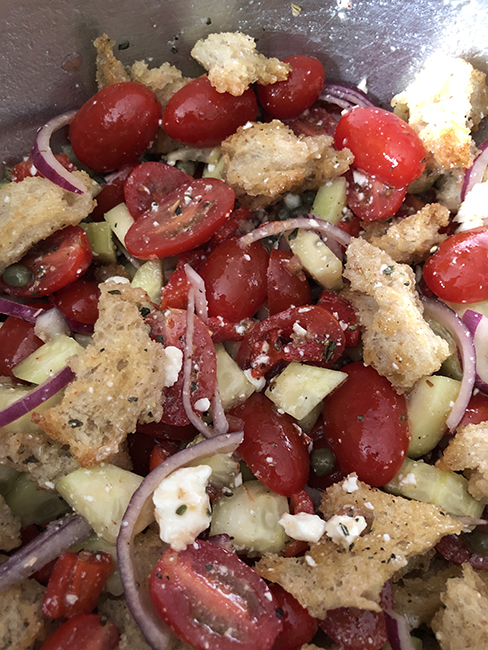
Panzanella

panzanella
Panzanella is a great way to eat tomatoes and use up the end of that sourdough loaf that you can’t get anyone to eat! The salad in the picture is made with grape tomatoes and cucumbers – a mix of the grape and slicing tomatoes in this week’s box will work fine, and omit the cukes if you’re out.
Makes 4-6 servings
Takes 30 minutes or less

about 4 ounces crusty bread – 4 large slices or so
1 clove garlic, minced or pressed
2 tablespoons olive oil
2 1/2 pounds of tomatoes, any variety
2 tsp. Dijon or other prepared mustard
a good pinch of sugar
another one of coarse salt
freshly ground black pepper
2 tablespoons red wine vinegar
a good pinch of sugar
another one of coarse salt
freshly ground black pepper
1/4 cup olive oil
1/4 of a large red or sweet white onion, peeled and thinly sliced
2 tablespoons capers, drained (optional)
a couple of good handfuls of herbs (basil or parsley), chopped or torn as appropriate
3 oz. feta cheese, crumbled

Preheat the oven to 350. Tear the bread into coarse chunks, crouton size, and place it in a bowl large enough for tossing. Pour in 2 tablespoons of the olive oil, and add the garlic, and toss. Turn the oiled bread out onto a sheet pan, and toast in the oven until golden. Let cool.

Mix the mustard, sugar, salt, pepper, and vinegar in the bottom of the bowl you’ll serve your salad in. Drizzle in the olive oil while whisking. Cut the tomatoes in half, squeeze out some of the juice and seeds, and cut them into bite size pieces. Add them to the bowl with the bread, onion, and capers, and toss well. Add the herbs and toss again. Right before serving, which should be within in an hour or two, top the salad with the crumbled feta.

Summer 2021 CSA box recipes

Focaccia with Roasted Peppers

focaccia
Based on Carol Field’s Focaccia from Genoa, in Focaccia, Simple Breads from the Italian Oven
10-12 servings
Takes about 45 minutes active time, plus 2 hours to overnight to rise

Sponge:
2 1/2 teaspoons (scant tablespoon, or one pack) active dry yeast
2/3 cup warm water (105° to 115° F – should feel just barely warm)
1 cup unbleached all purpose flour

Dough:
all of the sponge
1/2 cup room temperature water
1/3 cup white wine – also room temp
1/3 cup olive oil
2 3/4 – 3 cups unbleached flour
2 teaspoons table salt

Topping:
About 2 tablespoons olive oil, and about 2 teaspoons flakey salt
2-3 roasted peppers, technique below

Make the sponge: Pour the water into a mixing bowl, or the bowl of your stand mixer. Sprinkle in the yeast, then add the flour and mix with a rubber spatula until smooth. Cover the bowl and let rise for at least 30 minutes and up to 2 hours until bubbly and puffy.

Make the dough: Pour the water, wine, and olive oil into the bowl with the sponge. Add 2 1/2 cups of the flour, and the salt. Mix with a wooden spoon or with the flat beater of the stand mixer until you have a soft dough that pulls away from the sides of the bowl, adding the additional flour as necessary. If you are using a stand mixer, increase the speed to medium, and beat/knead for 3 minutes. If you are making the dough by hand, turn it out onto a floured surface and knead for 6-8 minutes adding just enough flour to keep the dough from sticking. For both methods, form the dough into a smooth ball in the bowl, cover, amd let rise for about 1 hour, until doubled. The dough can also be refrigerated at this point for several hours, and up to overnight.

Roast the peppers: there are lots of ways to do this, but the method I like best is to arrange whole peppers on a parchment- or foil-lined baking sheet, and place them under the broiler. Broil until they are well charred, turning to get all sides. Put the peppers into a heat proof bowl, and cover with a plate or lid. Let steam and cool for at least 15 minutes. Place a cutting board tipped into your sink, and lay a pepper on the board. Split it open with a paring knife, and let the (possibly very hot!) juices run into the sink. Remove the stem, veins, and seeds, and turn the pepper over and peel off the skin.

Shape the dough: Pour about a tablespoon of olive oil into a 10 x 15 1/2 in. baking pan and dump the risen dough out into the pan. Turn it over to coat it with oil, and start stretching & pushing the dough to the sides of the pan. Let rest for about 15 minutes – 30 if refrigerated – and then continue stretching and dimple the dough with your fingertips. Add the toppings at this point – up to another tablespoon of olive oil plus the roasted peppers and salt. Let the dough rise for about 45 minutes to an hour.

Bake the focaccia: About 30 minutes before the end of the rising time, heat the oven to 425°. When the dough is risen, place it in the oven and spray the top of the dough and bottom & sides of the oven with water from a mister. Close the oven and reduce the heat to 400°. Spray with water twice more during the first 10 minutes of baking. Bake 25 – 30 minutes total, until golden brown. Serve warm or room temperature.

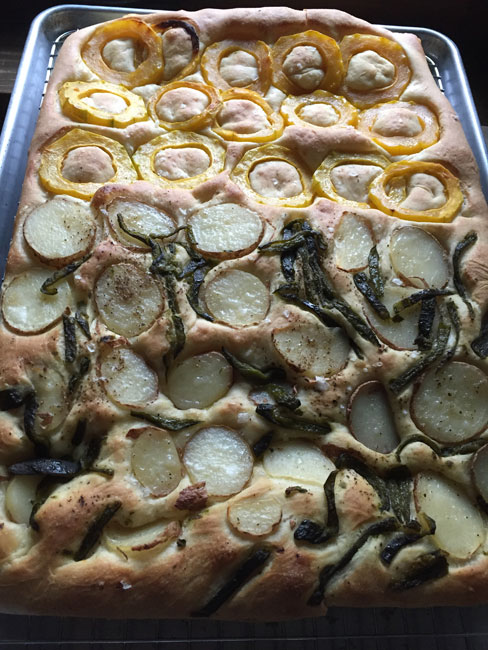
The example in the picture has roasted poblano chiles and potatoes, parboiled & sliced thin, and roasted delicata squash, also thinly sliced.

Summer 2021 CSA box recipes

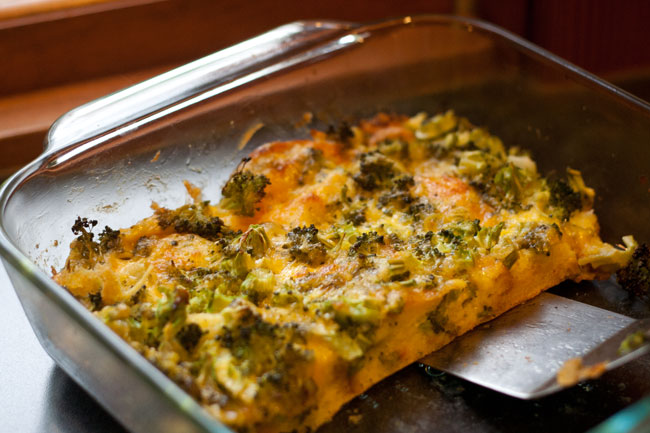
Broccoli Casserole

broccoli casserole
This is based on Jane & Michael Stern of Roadfood fame, and I got the recipe from the Splendid Table’s How to Eat Supper cookbook. It’s basically a strata, bread, egg, broccoli, and cheese.
Takes about 20 minutes active time, plus an hour to bake
Serves four generously

4-6 slices of bread, enough so that torn into bite-sized pieces it will cover the bottom of an 8-in. baking dish. The original recipe calls for soft white bread; I think soft whole wheat is good, too.
3 large eggs
1/4 cup milk
4 tablespoons butter, melted, plus a little extra for greasing the baking dish
1 cup grated cheddar cheese
1 teaspoon salt
1-2 tablespoons sugar (The original recipe calls for three!)
2 cups finely chopped broccoli – I like to do this in the food processor.

Heat the oven to 350°. Butter your baking dish – glass recommended, and cover the bottom of the dish with the torn bread. Beat the eggs, milk, and melted butter together, then add the cheese, salt and sugar. Stir in the broccoli and pour the mixture over the bread. Cover the dish with foil or a lid, and bake for about 45 minutes. Uncover and bake another 10 to 15 minutes to brown the top, and if you want an even crispier top crust, run the casserole under the broiler.

Summer 2021 CSA box recipes

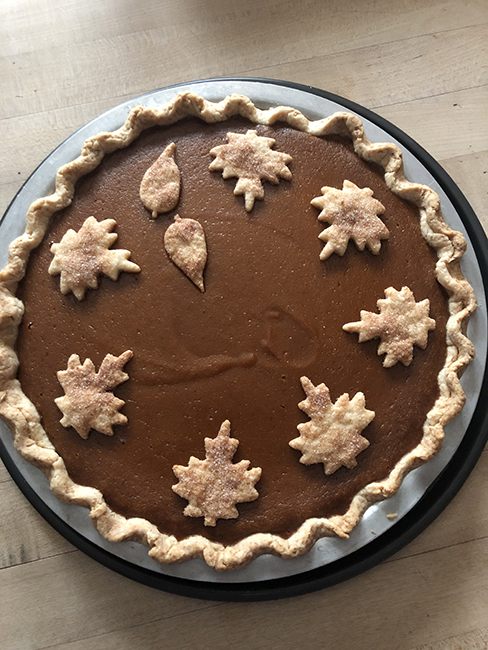
Caramel Pumpkin (or sweet potato) pie

Based on a recipe from November 2018 Food & Wine, this pie can be made with squash or pumpkin or sweet potato purée
Takes about 45 minutes active time, plus 30 minutes to chill the crust and 45 minutes to bake
Makes 8 big slices

Crust:
1 1/2 cups flour
good pinch salt, unless you’re using salted butter
1 tablespoon sugar
1/2 cup butter, either salted or un- (1 stick, 8 tablespoons)
1 tablespoon vegetable shortening or lard
1 tablespoon sugar
2-4 tablespoons cold water
Special equipment – pie weights or dried beans, parchment paper

Filling:
2 3/4 cups sweet potato puree (roasting the sweet potatoes will give you a drier puree, but steaming also works and is quicker!)
3 large eggs
3/4 cup granulated sugar
3 tablespoons water
2/3 cup heavy cream, warmed
2/3 cup packed dark brown sugar
3 tablespoons unsalted butter
1 teaspoon vanilla extract
a generous pinch of kosher salt
1 1/2 teaspoons ground cinnamon
1/2 teaspoon freshly grated nutmeg
OR use two teaspoons pumpkin pie spice blend, such as Penzey’s

Make the crust: measure the flour, salt and sugar into the bowl of your stand mixer (my favorite method), your food processor, or a mixing bowl. Slice the butter and shortening over the top and combine with the flour mixture, using the paddle attachment of the mixer, by pulsing the processor, or using a pastry blender, 2 knives or your fingers, until you have a crumbly mixture with no butter lumps bigger than currants. With the mixer or processor running, or while stirring with fork, drizzle in the water by tablespoons, until the mixture just starts to come together in clumps. Stop before you have one big ball. Turn the crust out onto a floured surface and knead lightly to bring it together. Gather it into a ball, flatten into a disk, wrap (in plastic, wax paper, one of your reusable snack/sandwich bags), and chill for about 30 minutes, and up to 2 days.

After chilling, roll out the crust and fit it into a deep 9-inch pie plate and trim and crimp the edges. Set it in the freezer or fridge to chill while you make the filling. Cut the trimmings into decorative shapes for the top of your pie, set them on a baking sheet, and chill them, too.

After the crust has chilled, heat the oven to 400°. Line the pie shell with parchment paper, and fill with pie weights or beans. Bake for 16 to 18 minutes. Sprinkle the cutouts with cinnamon sugar, and bake them, too – they’ll brown quickly, so watch carefully! After about 16 minutes, take the shell out, carefully remove paper and weights, and prick the bottom of crust all over with a fork. Return the crust to the oven and bake until bottom is lightly browned, another 4 to 6 minutes. Remove the crust from the oven and let it cool while you make the filling. Reduce the oven temperature to 350°.

Make the filling: Combine the pumpkin puree and the eggs – you’ll get the smoothest filling if you use a food processor, but you can whisk the eggs and potato together in a big bowl, too.

Stir the granulated sugar and 3 tablespoons water together in saucepan much bigger than you think you will need – at least 2 quarts. Cook over medium heat until the sugar melts, about 3 minutes. Increase heat to medium-high and continue cooking, occasionally swirling the saucepan, until mixture is a rich caramel in color, 6 to 7 minutes. Remove from the heat and carefully pour in the warm cream – it will bubble furiously – this is why you need a big pan! Whisk in brown sugar and butter until smooth and incorporated.

Whisk (or pour into the food processor) the warm caramel sauce into the pumpkin & egg mixture, and add the vanilla, salt, cinnamon and nutmeg. Pour the filling into the pie shell and smooth the top. Bake until the filling is just set, about 45 minutes. Decorate the top with your crust cutouts while the pie is still warm – they’ll stick better that way.

Summer 2021 CSA box recipes

Pasta Melanzane #1

Bittman's pasta alla Norma
Photo by Sabra Krock for The New York Times

Sometimes called Pasta alla Norma; serves 4-6
Takes about 45 minutes

1 1/2 pounds eggplant
approximately 1/2 cup olive oil
1 tablespoon garlic, minced or put through a press
1 bell pepper, any color, sliced or chopped
1 1/2 pounds tomatoes, peeled, seeded, and chopped (or a 14 oz. can)
1 pound pasta – fettucine is traditional here; spaghetti also work
1/2 cup chopped basil
1/2 cup grated Parmesan or Romano cheese
Salt and freshly ground pepper

Heat the oven to 400° Slice the eggplant into rounds about 1/2 inch thick. Brush with olive oil, arrange in a single layer on one or two baking sheets, and sprinkle with salt and pepper. Bake until softened and browned, about 15 minutes. Let cool on the baking sheets.

Meanwhile, put a large pot of water on to boil and salt it, and when it’s boiling add the pasta. Cook the pasta until tender but not mushy, and drain.

Heat about a tablespoon of the olive oil in a skillet large enough to hold the pasta and cook the garlic and peppers, until the garlic colors a little bit, and the peppers have started to soften. Add the tomatoes along with some salt and pepper; continue to cook until saucy but not too dry, stirring occasionally.

Cut the eggplant into strips and add to the peppers & tomato mixture. Add the drained pasta and toss well. Taste and adjust the seasoning, then top with the basil and grated cheese and serve.

Summer 2021 CSA box recipes